Frozen Ice: A Font That Commands Attention
There's a certain energy that comes with bold, expressive typography. It grabs you before you've even read the words. Frozen Ice is a typeface built for exactly that kind of impact—a fancy, various themes font designed to make logos, headlines, and creative projects stand out with a distinctive visual punch. Whether you're designing a brand identity, crafting a poster for a music event, or building a social media campaign, this font brings a level of personality that more restrained typefaces simply can't match.
What Makes Frozen Ice Visually Striking
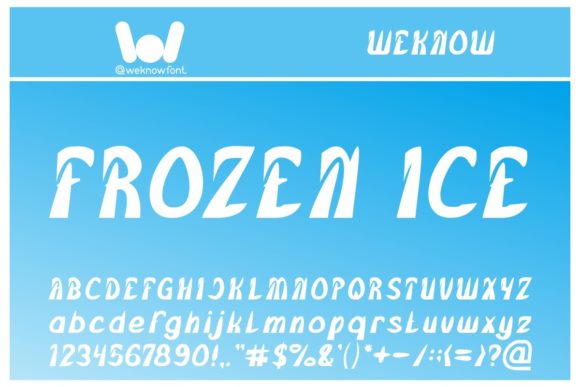
At its core, Frozen Ice is a display typeface. That means it's engineered for large-scale use—think titles, logos, hero sections on websites, and anything where text needs to be the focal point rather than background noise. The letterforms carry a sense of flair and movement, with stylistic details that give each character a handcrafted feel. It's not a font you'd set a 500-word blog post in, but that's not its job. Its job is to stop someone mid-scroll, to make a magazine cover pop off the rack, or to give a brand logo that unmistakable presence.
What sets this particular creative font apart is its versatility across themes. Some display fonts lock you into one aesthetic—ultra-modern, retro, grungy. Frozen Ice offers enough stylistic range that it can adapt to different moods depending on how you use it. Pair it with clean sans serif fonts and minimal layouts for a contemporary feel. Combine it with textured backgrounds and bold color palettes for something more theatrical. The font gives you a strong starting point and lets the rest of your design decisions shape the final tone.
Where This Font Truly Shines
Think about the projects where typography carries the heaviest load. Logo design is an obvious one. A wordmark built with Frozen Ice immediately communicates energy and creativity, which works well for brands in entertainment, fashion, food and beverage, or any industry where personality matters. The apparel industry is another natural fit—clothing brands need typefaces that look just as good on a hang tag as they do screen-printed across a hoodie.
Poster design and editorial layouts benefit enormously from a font with this kind of character. Movie posters, music album covers, magazine headers, book titles, comic covers, and cartoon branding all rely on type that tells a story before a single image loads. Frozen Ice steps into that role confidently, giving designers a typeface that feels intentional and curated rather than generic.
For digital creators, the applications are just as broad. Social media graphics need to compete in crowded feeds, and a distinctive font helps your content get noticed. Website headers, blog post titles, YouTube thumbnails, and digital product covers all benefit from a premium font that carries visual weight. Even something as simple as an invitation or a greeting card gets elevated when the typography feels special rather than default.
Building a Brand Identity Around Strong Typography
One of the most overlooked aspects of brand identity is font selection. Many small business owners and entrepreneurs spend weeks perfecting their logo colors and imagery but grab a free font at the last minute. The result is a brand that looks polished in some areas and inconsistent in others. Choosing a typeface like Frozen Ice as part of your brand toolkit gives you a visual anchor—a recognizable typographic voice that carries through your packaging design, website, marketing assets, and print materials.
Visual consistency is one of the strongest drivers of brand recognition. When your audience sees the same typeface across your Instagram posts, your email headers, your product labels, and your storefront signage, they start to associate that lettering with your business. It becomes shorthand for your brand's personality. Frozen Ice, with its distinctive character, makes that association happen faster because it's memorable in a way that more neutral fonts aren't.
That said, strong typography isn't just about looking good. It's about communication. The fonts you choose signal who you're speaking to and what you stand for. A playful, expressive typeface tells a different story than a rigid, corporate one. If your brand targets a creative, youthful, or entertainment-focused audience, a font like Frozen Ice aligns naturally with that positioning.
Practical Tips for Using Display Fonts Effectively
Working with a fancy various themes font requires some restraint and strategy. Here are a few things worth keeping in mind as you incorporate Frozen Ice into your projects:
- Limit it to headlines and focal text. Display fonts are designed for impact at larger sizes. Using them for body copy creates readability issues. Pair Frozen Ice with a clean serif font or sans serif font for longer passages of text.
- Test your font pairings. Before committing to a design, see how Frozen Ice interacts with your secondary typeface. Look for contrast in weight and style—pairing two expressive fonts together usually creates visual clutter rather than harmony.
- Consider your medium. A font that looks incredible on a poster at 72pt might lose its details when used as a small web header at 24pt. Review how the typeface renders at the specific sizes your project requires.
- Check the included styles. Many premium fonts come with multiple weights, alternates, or stylistic sets. Explore what's included in the Frozen Ice family so you can take full advantage of its range.
- Review licensing carefully. If you're using the font for commercial projects—client work, merchandise, products for sale—make sure you have the appropriate commercial font license. This protects both you and the font creator.
Making Typography Work Across Platforms
One of the real-world challenges designers face is ensuring that typography translates well across different platforms and formats. A font that dominates a printed poster needs to perform just as well as a web font on a mobile screen. Social media graphics require text that remains legible when compressed into a small preview. Packaging design demands type that holds up on curved surfaces, metallic foils, and textured paper stocks.
Frozen Ice works across these scenarios because of its clear letter structure. Despite its decorative qualities, each character maintains enough definition to remain readable in various contexts. That balance between style and legibility is what separates a genuinely useful design asset from a novelty font that looks great in a preview but falls apart in production.
For web design, consider how the font loads and renders across browsers. If you're using it for a website hero section or landing page headline, test it on multiple devices to confirm the visual impact holds up. For print materials, request a proof before a full production run, especially if you're working with specialty printing techniques like embossing or foil stamping where letter thickness matters.
Choosing the Right Font for Your Next Project
Every design project has its own set of requirements, and no single typeface solves every problem. The value of a font like Frozen Ice lies in its ability to fill a specific role exceptionally well—the role of the attention-grabbing, personality-rich display typeface that gives a project its visual identity. It's the font you reach for when you need something with presence, when a default option won't communicate the right energy, and when your project calls for modern typography that feels both contemporary and expressive.
Whether you're a graphic designer working on client branding, a small business owner building your visual identity from scratch, a content creator looking for better social media graphics, or a hobbyist designing invitations and personal projects, having a versatile display font in your toolkit changes what's possible. Frozen Ice gives you that foundation—a creative font built for the kinds of projects where typography isn't just functional but is the design itself.