Cromons: A Medieval Typeface for Modern Impact
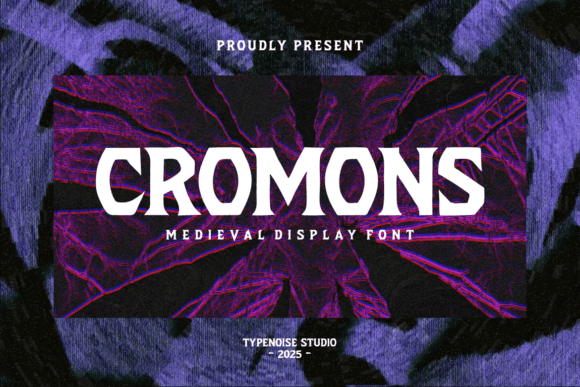
There's a certain weight to medieval lettering that modern fonts often struggle to capture. It's not just about looking old or decorative—it's about conveying authority, history, and a sense of story through letterforms alone. Cromons manages to strike that balance with remarkable precision. This display typeface draws from gothic inscriptions and old European craftsmanship, yet it reads cleanly enough for contemporary projects that demand both character and clarity.
Where Sharp Serifs Meet Dramatic Presence
What makes Cromons visually compelling is its combination of sharp serif structure and chiselled angles. The letterforms feel carved rather than drawn, which gives text an almost three-dimensional quality. Each character carries dramatic weight without becoming illegible—a common pitfall with decorative medieval fonts. The serifs are pointed and deliberate, adding to that sense of ancient authority while maintaining consistent spacing and rhythm across words.
For designers who work with fantasy branding, dark aesthetics, or historically inspired visuals, this kind of font solves a real problem. You get the gravitas of gothic lettering without sacrificing the readability that modern audiences expect. Whether you're setting a headline for a book cover or designing a logo for a craft brewery with medieval theming, the typeface does the heavy lifting of establishing mood before anyone reads a single word.
Real Projects That Benefit from Medieval Display Typography
Think about the last time a movie poster, game title, or album cover grabbed your attention with its typography alone. Chances are, the font communicated something visceral—intrigue, power, rebellion, or mystery. Cromons fits naturally into these contexts. Game developers creating titles for RPGs or strategy games will find it immediately useful for splash screens, menu headers, and promotional materials. The font's angular construction echoes the visual language of swords, shields, and stone castles without feeling cartoonish.
Band logos represent another strong application. Metal, folk, and rock artists frequently lean into medieval and gothic aesthetics for merchandise and album artwork. A typeface like Cromons provides that raw, handcrafted energy while remaining versatile enough to scale from a small chest print to a massive festival banner. The letterforms hold their integrity across sizes, which matters enormously when your design needs to work on a Spotify thumbnail and a vinyl sleeve simultaneously.
Publishers and authors working on fantasy, historical fiction, or horror genres will also appreciate what this typeface brings to book covers and chapter headings. Editorial design within these genres often relies on typography to set expectations before the reader turns a single page. Cromons delivers that instant genre signaling—dark, epic, storied—without requiring additional graphic elements to do the work.
Building Brand Identity with a Distinctive Typeface
Small business owners sometimes overlook typography as a branding tool, focusing instead on color palettes and imagery. But a distinctive typeface can become the most recognizable element of a brand. Consider how certain craft beverage companies, escape rooms, historical tourism brands, or themed restaurants use medieval-inspired lettering to reinforce their identity. Cromons offers that kind of instant recognition potential.
The key is matching the font's personality to your brand's voice. If your business trades in authenticity, tradition, craftsmanship, or adventure, a typeface rooted in medieval design traditions reinforces those values visually. A specialty coffee roaster emphasizing hand-crafted methods, for instance, might pair Cromons with earthy tones and textured backgrounds to create packaging that feels artisanal and intentional. A medieval-themed event company could use it across invitations, signage, social media graphics, and merchandise to maintain visual consistency that strengthens brand recognition over time.
Consistency matters more than most people realize. When your typography stays cohesive across touchpoints—website headers, business cards, Instagram posts, product labels—your audience starts associating that visual language with your brand. They recognize you before they even read your name. That's the power of thoughtful font selection applied strategically.
Practical Considerations for Working with Display Fonts
Display fonts like Cromons are designed for impact at larger sizes, so they work best for headlines, logos, titles, and short text blocks rather than body copy. This isn't a limitation—it's simply how display typefaces function. Pairing it with a clean sans serif or a simple serif font for longer paragraphs creates visual hierarchy and keeps your designs readable. A bold medieval headline followed by a straightforward body text in something like a humanist sans serif gives readers both the emotional hook and the comfortable reading experience they need.
Testing font pairings before committing to a final design saves considerable time. Set your headline in Cromons, then experiment with three or four different body fonts. Look at the combination on screen and in print if your project involves physical materials. Pay attention to how the weights interact—does the display font overpower everything, or does it create a natural focal point that guides the eye downward into the supporting text?
Readability deserves special attention whenever you work with stylized letterforms. At very small sizes, the sharp serifs and dramatic angles that give Cromons its personality might lose definition. This is normal for display fonts and reinforces why they're best reserved for larger applications. For social media graphics, test how the font renders at the dimensions your audience will actually see. A title that looks magnificent on your 27-inch monitor might feel cramped in an Instagram story viewed on a phone screen.
Licensing and Long-Term Value
Before incorporating any premium font into commercial work, reviewing the licensing terms is essential. Different typeface licenses cover different use cases—some include desktop, web, and app usage while others require separate purchases for each. Understanding what your license covers protects you legally and ensures you can use the font across all your intended applications without unexpected restrictions. Most reputable font designers and foundries outline these terms clearly, and it's worth reading them carefully rather than assuming blanket coverage.
Cromons, as a commercial font designed for creative professionals, typically comes with licensing structured for real-world project needs. Whether you're a freelance designer working on client branding, a small business owner developing your own visual identity, or a content creator building merchandise, knowing your rights with the typeface gives you confidence to use it broadly and creatively.
Typography remains one of the most cost-effective design assets available. A single well-chosen font can unify an entire brand system, elevate marketing materials, and make your work look polished and intentional. For anyone building projects that call for history, mystery, or heroic grandeur, Cromons delivers that medieval energy with the kind of clean execution that modern design demands.