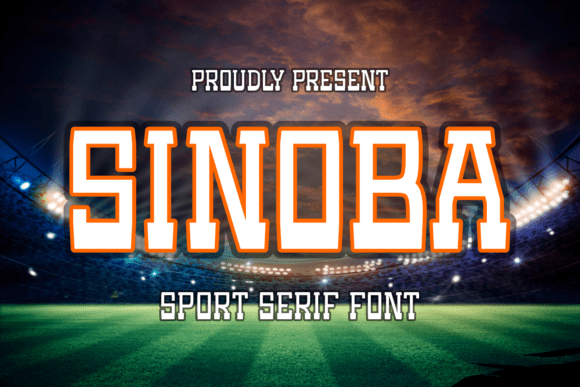
Sinoba: The Bold Typeface That Commands Attention in Sports and Branding
Imagine a font that doesn't just sit on the page but leaps off it, carrying the energy of a sprinter at the starting blocks or the roar of a stadium crowd. That's the immediate impression of Sinoba. It's a typeface built for impact, blending the classic authority of serif fonts with a contemporary, athletic edge. For anyone creating designs that need to communicate strength, speed, and unmissable presence, Sinoba offers a powerful solution that goes far beyond just looking "cool."
Understanding Sinoba's Visual Personality
At its core, Sinoba is a display font with a distinct character. Think of traditional serif fonts like Times New Roman—they have those small lines (serifs) at the ends of strokes, often conveying formality and tradition. Sinoba takes that structure and injects it with a modern, muscular twist. The letterforms are thicker, bolder, and carry a slightly boxy, condensed feel. The outlines are sharp and clear, creating a sense of precision and forward motion.
This combination results in a typeface that feels dynamic and even slightly aggressive in the best way possible. It’s the typographic equivalent of a confident stance or a powerful logo mark. Despite its boldness, Sinoba maintains excellent readability at larger sizes, which is crucial for its primary applications. It’s not designed for body text in a novel, but for headlines that need to grab you from across a room or through a screen.
Where Sinoba Truly Shines: Practical Applications
The true test of any creative font is how it performs in real-world projects. Sinoba's strengths align perfectly with specific, high-impact scenarios.
- Brand Identity & Logo Design: For brands in the fitness, sports apparel, automotive, or energy drink sectors, Sinoba can become a cornerstone of their visual identity. A logo set in Sinoba instantly communicates power and performance. It’s also effective for esports teams, gaming studios, or any brand wanting a competitive edge.
- Marketing and Advertising Assets: This is where Sinoba excels. Use it for poster design for sporting events, concert promotions, or action movie titles. It’s perfect for eye-catching social media graphics, YouTube thumbnails, or banner ads where you have a split second to make an impression.
- Packaging and Merchandise: On product packaging for protein powders, sports equipment, or tech gadgets, Sinoba adds a premium, high-performance feel. For merchandise like t-shirts, hats, or gym bags, the font’s strong silhouette ensures designs are visible and impactful.
- Editorial and Digital Layouts: Magazine covers, especially for sports, automotive, or men’s interest publications, benefit from Sinoba’s commanding presence. In web design, it can be used for hero section headlines, but should be paired carefully with a highly readable sans-serif for body copy.
Pairing Sinoba with Other Fonts for Harmony
A common question with such a strong display typeface is how to use it without overwhelming a design. The key lies in thoughtful font pairing. Sinoba demands a partner that complements without competing.
For a clean, modern look, pair Sinoba with a neutral, geometric sans-serif font like Montserrat, Poppins, or Open Sans. The sans-serif handles the smaller text, ensuring readability, while Sinoba dominates the headlines. This creates a clear visual hierarchy.
If you’re aiming for a more editorial or sophisticated feel, consider pairing it with a light, elegant serif or a subtle script font for accents. The contrast between Sinoba’s power and a delicate script can create a dynamic and interesting composition, ideal for upscale sports branding or luxury product ads.
Always test your pairings. Set a headline in Sinoba and a paragraph in your chosen body font. View it at different sizes and on different screens. The goal is a balanced conversation between the two typefaces, not a shouting match.
Key Considerations Before You Download
Before integrating Sinoba into your next project, a few practical checks will ensure a smooth workflow and a professional result.
- Review the Full Font Family: Many premium fonts come with multiple styles—weights like Light, Regular, Bold, and Black, or stylistic alternates. Check what’s included. Having a range of weights gives you more flexibility to create emphasis and hierarchy within your designs.
- Understand the Licensing: This is critical for any commercial font. Licensing determines how you can legally use the font. A license for a personal blog is different from one for a product sold globally or a client’s branding project. Always read the End User License Agreement (EULA) to ensure your use is covered, especially for digital products or merchandise.
- Test for Readability in Context: While Sinoba is clear at large sizes, test it in your specific application. How does it look on a dark background versus a light one? Does it remain legible when used for a logo that will be scaled down to a favicon? Run these tests early in the design process.
- Align with Your Project’s Voice: Ask yourself: Does the energy of Sinoba match the message I’m trying to send? It’s perfect for a sports brand, but might feel out of place for a serene yoga studio or a vintage bakery. Typography should be an extension of your brand’s personality.
Sinoba is more than just a set of bold letters; it’s a design asset that can define the energy of a project. By understanding its personality, applying it to the right contexts, and pairing it wisely, you can harness its power to create visuals that are not only seen but felt. It’s a tool for designers, entrepreneurs, and creators who need their work to stand out in a crowded space with confidence and dynamism.